
Betrayal Trauma
How Betrayal by Spiritual Leaders (or a trusted figure) Rewires the Brain

What Is Betrayal Trauma?
Betrayal trauma occurs when an individual is harmed by someone they depend on for safety, support, or survival, such as a parent, caregiver, intimate partner, or spiritual leader. Unlike other forms of trauma that result from external threats (e.g., natural disasters or accidents), betrayal trauma is relational and profoundly personal. The very person or system that should provide protection becomes the source of harm.
Freyd (1996), who first coined the term, explains that betrayal trauma is particularly disorienting because the survivor often has to remain attached to or dependent on the person or institution that betrayed them. Consequently, the brain may suppress or fragment awareness of the abuse to preserve the relationship or maintain psychological safety, a phenomenon known as betrayal blindness. ** Blind to Betrayal, Freyd’s book is an excellent read.
In spiritual settings, betrayal trauma can be particularly complex. Survivors are not only betrayed by an individual but also by a representation of God, leaving their sense of morality, identity, and meaning in disarray. When faith is weaponised or entangled with abuse, the wounds extend across spiritual, psychological, and physiological domains.
Betrayal trauma, especially when experienced in faith-based environments, constitutes a psychological injury and leads to neurobiological disruption. When spiritual leaders exploit their power through grooming, coercion, or abuse, the survivor’s sense of safety, trust, and identity is shattered. Recent neuroscience highlights what survivors have long understood: the impact of betrayal is profound and enduring, altering both brain function and emotional regulation.
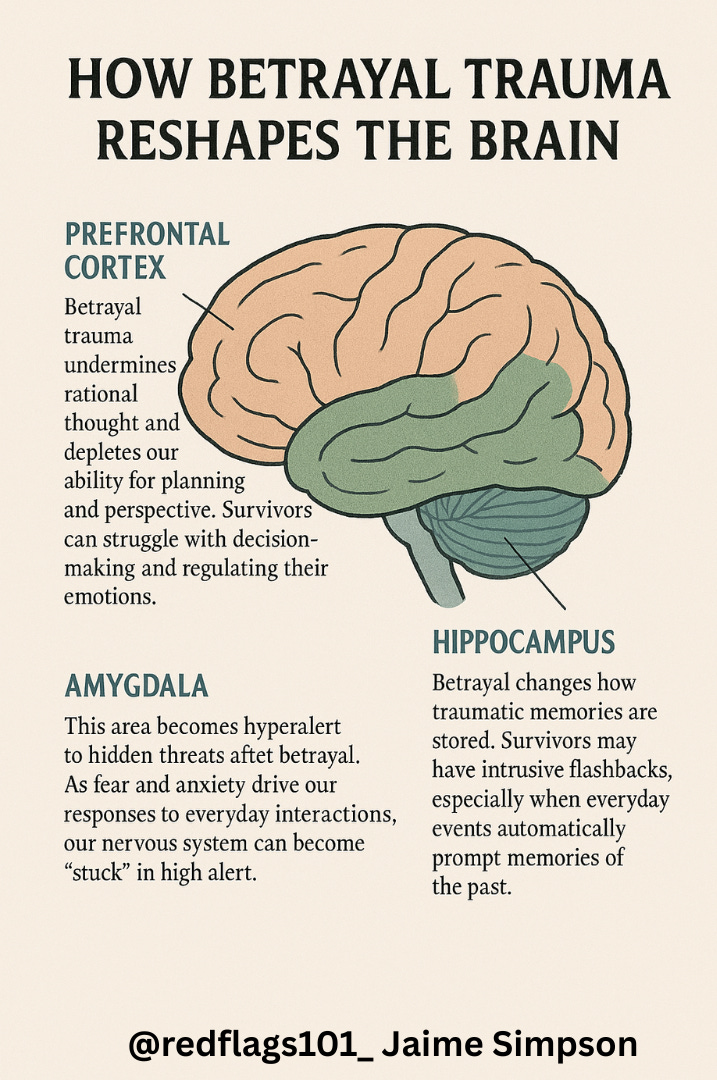
Understanding the Brain’s Response to Betrayal Trauma
Trauma disrupts the integration of cognitive, emotional, and physiological systems. When that trauma is relational and spiritual, as is often the case in clergy sexual abuse, the effects are particularly complex.
Unlike acute trauma, betrayal trauma in faith contexts is often chronic and covert. Survivors may develop symptoms consistent with Complex PTSD (Herman, 1992), including affect dysregulation, relational disturbance, and identity confusion. When abuse is spiritualised, framed as divine will or concealed under the guise of pastoral care, survivors are not only physically and emotionally harmed, but also spiritually disoriented.
Recent findings by Schwartz et al. (2024) demonstrate how trauma reshapes the structure and function of key neural regions: the amygdala, prefrontal cortex, and hippocampus.
Amygdala: The Brain’s Alarm System
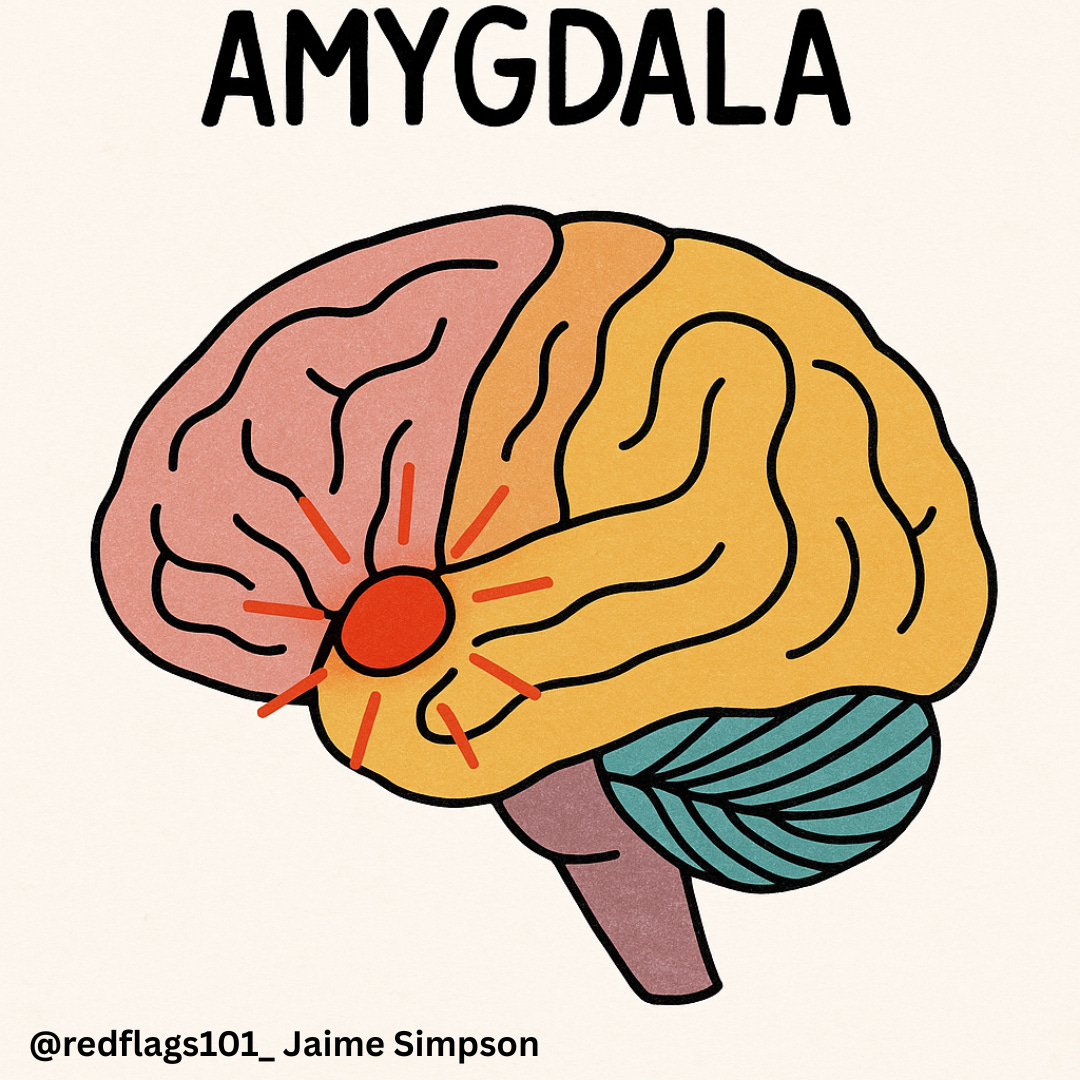
The amygdala is the brain’s threat detection centre; it activates our fear response to keep us safe from danger. In the context of betrayal trauma, particularly when the harm is relational and ongoing, the amygdala can become chronically hyperactive. Survivors often experience persistent hypervigilance, anxiety, and panic- not because they are currently unsafe, but because their brain is reacting as if they are.
Consider, for example, a survivor who avoids their local shopping centre. The fear isn’t irrational; it’s rooted in the possibility of encountering someone from their former church- a place once associated with belonging but now deeply linked to betrayal. The nervous system, conditioned by trauma, sends a signal: this space may not be safe.
This reaction is often more intense when returning to the site of the abuse, such as a church building. Even if the perpetrator is long gone and decades have passed, sensory cues like the car park, the carpet, the lighting, the smell of coffee, or the toilets can trigger a visceral fear response. These are not just memories; they are embodied experiences, and the body remembers what the mind may try to forget.
On a personal note: I once returned to the church where I experienced ongoing sexual harrassement. It was for a funeral. I dissociated. Another time, I had no choice but to park in front of that same church before a therapy session. After the session, I got into my car, turned on the radio, and the first line blaring out was, “Am I ever gonna see your face again?” If you know the song, you know what comes next. I laughed out loud and gave myself permission to use my swearing voice! That dark humour? It’s a coping strategy. And yes, our humour changes. It becomes survival.
Prefrontal Cortex: Impaired Reasoning and Emotional Regulation
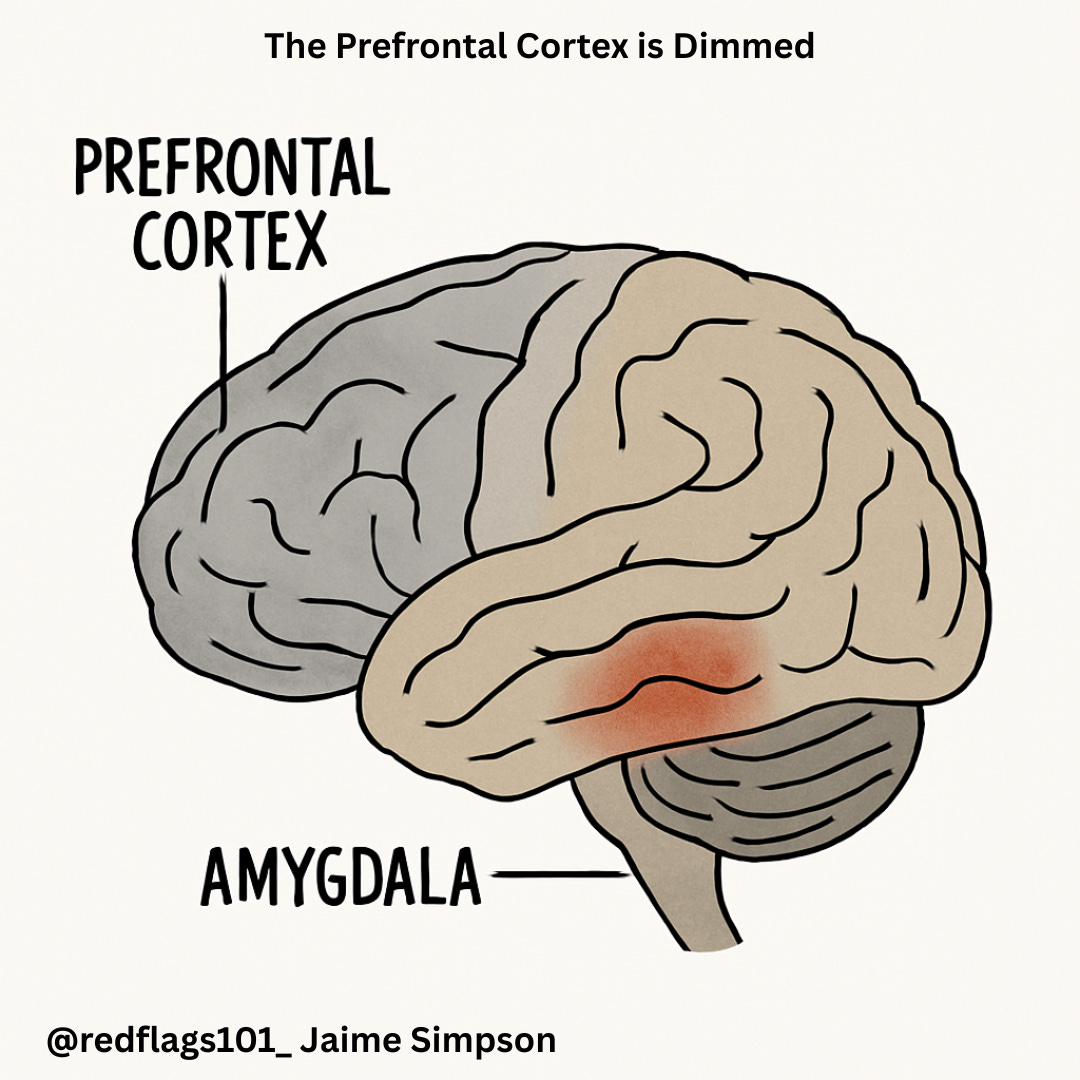
The prefrontal cortex is responsible for executive functioning, which includes decision-making, impulse control, emotional regulation, and moral reasoning. It enables us to assess risk, plan for the future, and evaluate ethical judgments. However, trauma, particularly betrayal by a trusted authority figure, can suppress activity in this region. This disruption impairs the brain’s ability to process information clearly, regulate emotions, and make rational decisions under stress. Survivors of clergy abuse often report feeling overwhelmed by confusion, self-doubt, and shame. These responses are not signs of personal weakness or naivety; they are the result of neurological impairment compounded by moral injury.
As Dr. Janja Lalich (2021) explains, when a trusted figure's deception and exploitation become apparent, the overwhelming unfairness of the betrayal can be psychologically unbearable. Survivors often blame themselves, not because they are at fault, but because it provides a sense of control in an otherwise chaotic situation: “If I missed this, it must be something wrong with me.”
For example, a survivor might think, “How did I not see this coming?” or “Maybe I was complicit.”
However, the abuse was orchestrated precisely through a manipulated trust dynamic, in which the prefrontal cortex was gradually bypassed through grooming, emotional enmeshment, and spiritual justification.
It’s important to understand that this impaired reasoning is not permanent. However, while the trauma is active, the emotional brain takes precedence over the logical brain. Survivors may intellectually recognise that what happened was wrong, yet still feel responsible because of the neural and emotional hijacking that occurred.
Understanding this helps dismantle internalised blame and reframes survivor confusion as a normal, even predictable, response to an abnormal situation.
Hippocampus: Memory Distortion and Flashbacks
The hippocampus plays a central role in organising memory, helping the brain distinguish between the past and the present. It provides temporal context, allowing us to say, “that happened then, and I am safe now.” However, trauma can impair this function, particularly when it is chronic, relational, or unresolved. When the hippocampus is affected, survivors may experience intrusive memories, flashbacks, and time disorientation. What begins as a seemingly mundane experience, a hymn playing in a café, the smell of incense, a particular phrase from a sermon, can suddenly trigger an involuntary emotional and somatic memory, transporting the survivor back to the original moment of harm. The brain may “time-stamp” that memory as if it is happening now.
This is particularly complex in cases of religious trauma, where cues from the abusive environment are often deeply woven into daily life. Faith-based language, music, community rituals, or even the sound of someone praying aloud can all serve as triggers, reigniting feelings of terror or shame within seconds.
Moreover, since the hippocampus also links memory to meaning, survivors may find themselves re-evaluating not just what occurred, but what it meant. They may ask: Was I ever safe? Was my faith genuine? Did I overlook the signs? These existential questions do not indicate instability, they reflect that the survivor’s cognitive and spiritual frameworks have been destabilised by betrayal.
For many, it’s not just a matter of forgetting or “moving on.” It’s about surviving in a world where the past continually resurfaces in unexpected places, not due to weakness, but because the brain is still trying to make sense of what happened.
The Brain’s Remarkable Capacity to Heal
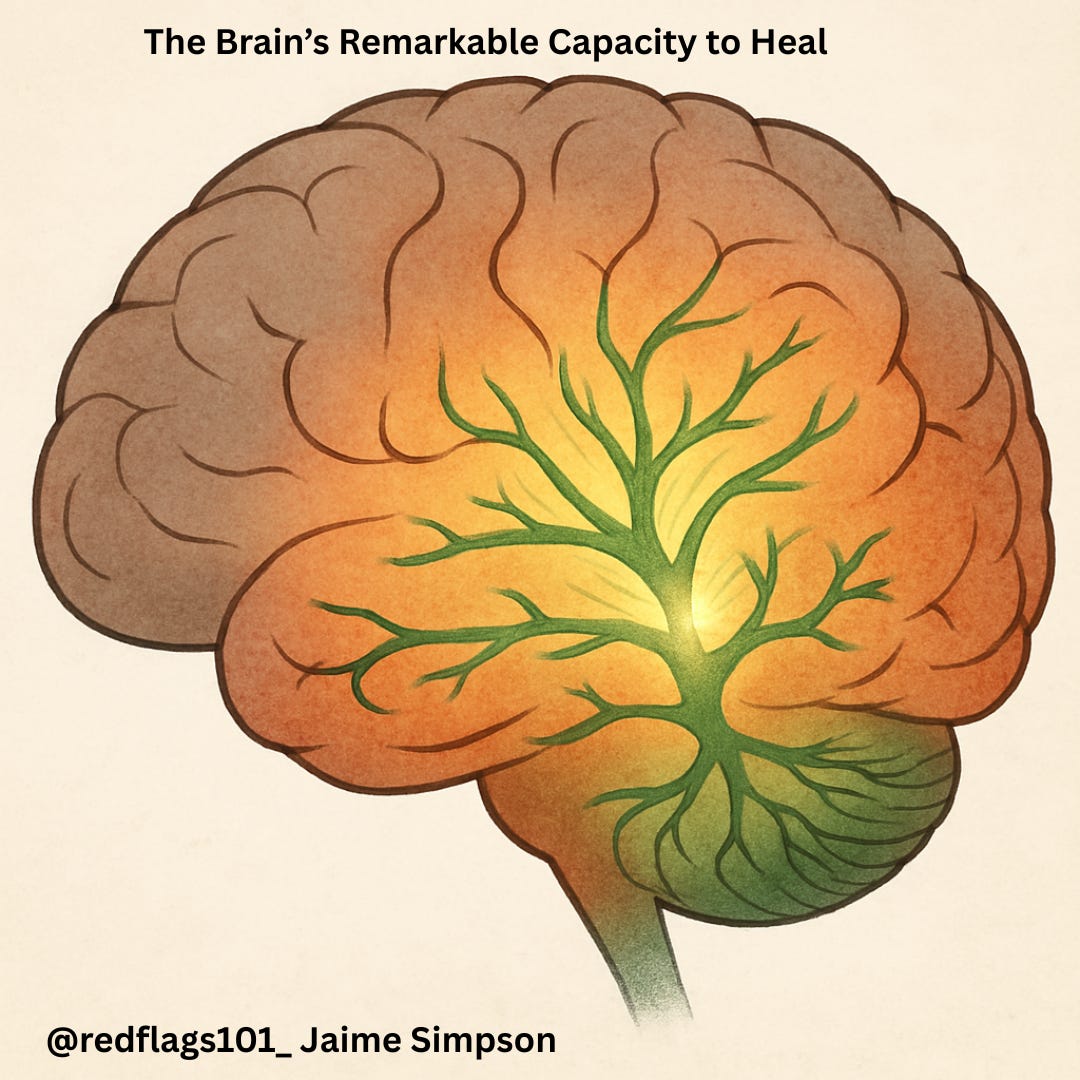
One of the most powerful insights from contemporary neuroscience is this: the brain is not fixed; it is plastic. Even after enduring profound trauma, including betrayal in spiritual contexts, the brain possesses an incredible capacity to adapt, rewire, and recover. This phenomenon, known as neuroplasticity, refers to the brain’s ability to form new neural connections in response to experience, learning, and relational safety. When survivors receive support through validation, trauma-informed care, and psychoeducation, their nervous systems can begin to shift from survival mode to a state of greater regulation and integration.
Healing doesn’t mean forgetting. It means that over time, the amygdala can learn to quiet down, the prefrontal cortex can re-engage, and the hippocampus can begin to place memories back in their proper place, in the past.
Recovery is not linear. It is a layered process of reconnecting with one’s body, beliefs, and boundaries. It involves grieving the loss of spiritual innocence, re-evaluating systems of meaning, and reclaiming agency. But every moment of safety, every compassionate relationship, and every act of self-trust lays the groundwork for neurological repair. As van der Kolk (2014) reminds us, “the body keeps the score”, but it also holds the potential to tell a new story. And the brain, for all its fragility, is also a site of remarkable resilience.
The Importance of Neuro-Informed Care
Understanding the brain’s response to betrayal trauma is crucial for effective care and advocacy. Survivors benefit from:
• Validation that their symptoms are not signs of weakness, but rather indicators of survival
• Trauma-informed therapy that recognises religious and moral injury
• Psychoeducation about the connection between the body and the brain
• Supportive communities that prioritise safety, voice, and self-determination
Healing from betrayal in spiritual communities involves rebuilding not only self-trust but also one’s worldview, often from the ground up. However, recovery is possible, especially when the impacts are named, understood, and addressed with compassionate care.
References
Herman, J. L. (1992). Trauma and recovery: The aftermath of violence—from domestic abuse to political terror.Basic Books.
Schwartz, J. M., Thompson, B. L., & Rivera, M. (2024). Neural correlates of betrayal trauma: Longitudinal effects on emotional regulation and memory systems. Journal of Traumatic Stress Neuroscience, 17(1), 34–49.
Freyd, J. J. (1996). Betrayal trauma: The logic of forgetting childhood abuse. Harvard University Press.
van der Kolk, B. A. (2014). The body keeps the score: Brain, mind, and body in the healing of trauma. Viking.
I find the concept of Betrayal Trauma so helpful as a church abuse survivor, and in our faith & abuse group. We find that there is an additional layer of spiritual harm with faith abuse as it can be at the core of your identity. Also losing faith can mean losing your family and community. We were talking last night about healing and exploring what that means to us. We can see changes from therapy & being with other survivors. But it's not restoration, you can't go back. It's not being 'fixed' trauma wounds or scars remain. Maybe some measure of peace or contentment. Being more compassionate and empathetic. Interested to hear your thoughts on that.
Brilliant. Informative. Thank you